Exclusive £50 Cashback Voucher
Help your friends find a student home they truly love! Refer & earn £50 on each successful booking!



Student Accommodation
Student accommodation in Frankfurt covers single rooms, studios, and one-bedroom apartments across the city's top student neighborhoods. Properties co...Read More
Student accommodation in Frankfurt covers single rooms, studios, and o...Read More
Properties
From / Month
Universities
Support

All Properties Verified
No hidden fees
Free 24/7 booking support
Flexible Payment Options
£50 Exclusive Voucher Included

Student Accommodation (2)
Private Let (61)
Young or Working Professional Housing (1076)
Homestays (1)


Map View

 Filters

Map

Our student housing experts know frankfurt inside out. Get free, personalised advice — no pressure.
Map View


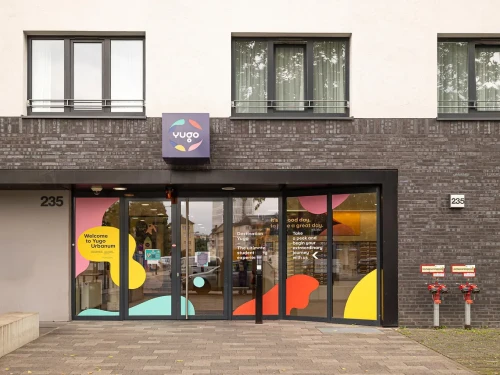

Mainzer Landstraße 235 and 231 60326 Frankfurt am Main

27 mins by public transport to Central Frankfurt
€831.60
/month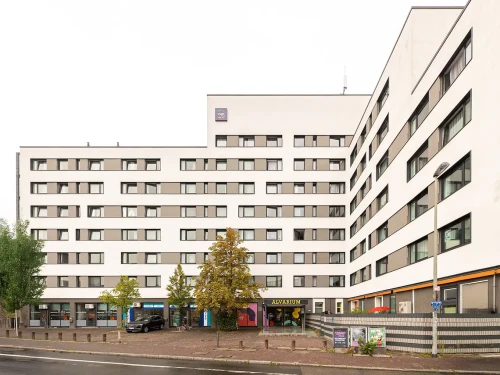
Adalbertstraße 44-48 60486 Frankfurt
41 mins by public transport to Central Frankfurt
€869
/month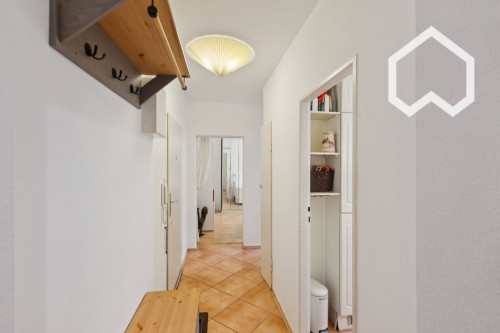
266 Eschersheimer Landstraße
12 mins by car to Central Frankfurt
€1,250
/month...
Frankfurt is Germany’s fifth-largest city. It is on the right and left sides of the river Main, which is the longest tributary of the Rhine. It has approximately 778,000 residents. It is called the financial capital of Europe because it’s the home to the European Central Bank and the headquarters of the Deutsche Bundesbank. Frankfurt’s name comes from an old term meaning 'Ford of the Franks'. A ford is a shallow place in a river where people can cross on foot. The city was once spelt 'Frankfort', but by the 1800s, 'Frankfurt' became the official spelling. In the 1300s, “am Main”, meaning “on the Main River”, was added to show its location along the river.
The student population at universities in Frankfurt is around 70,000, spread among three prominent institutions: Goethe University Frankfurt, Frankfurt School of Finance & Management and Frankfurt University of Applied Sciences. The city offers a lot of student accommodation options for international students. Usually, Casita helps international students choose a home within different budgets and near their university.
The top three universities in Frankfurt are Frankfurt School of Finance and Management, Goethe University Frankfurt, and Frankfurt University of Applied Sciences.
It is one of the prestigious universities that ranks 316th worldwide according to the QS World University Rankings. The university attracts around 29,786 students. The number of international students is around 3,895. The university comprises 16 faculties, with strengths in finance, economics, law, and philosophy, according to my German university.
Frankfurt University of Applied Sciences attracts more than 15,000 students from more than 100 nations. It consists of four faculties and over 72 degrees. The university offers practical, high-quality study programmes that prepare students for many careers. The university’s strongest fields, according to My German University, are architecture, civil engineering, computer science, social work and health.
The university was founded in 1957. It's a private university which focuses on finance, management, banking and accounting. The university attracts around 3000 students. The university offers bachelor’s, master’s, MBA and doctoral programmes.
In Frankfurt, there are many student accommodations available, catering to various budgets to suit every student. The accommodation types include single apartments, studios and shared apartments. Monthly budgets range from €405 to €1,200.
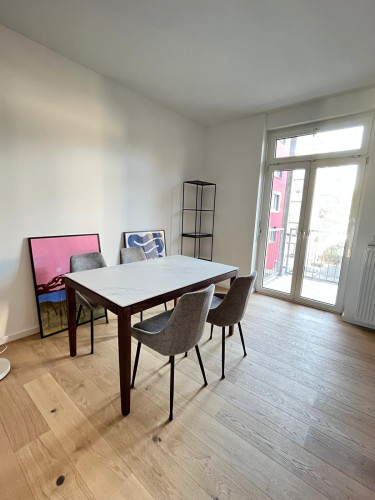
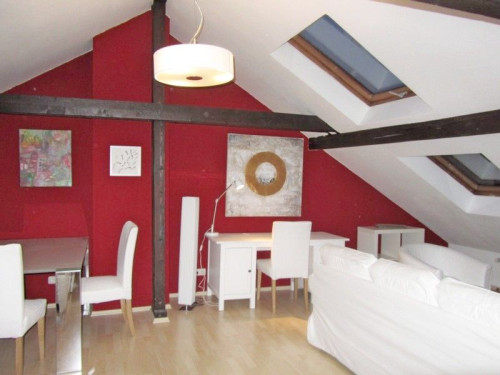
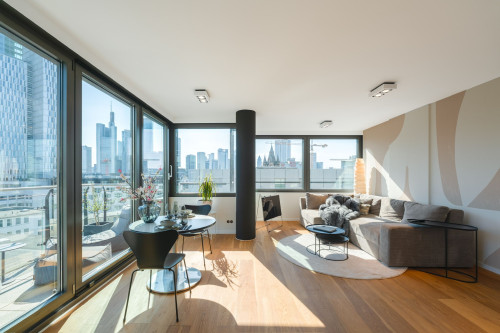
Amazing studio in a residence, next to the Flughafen Frankfurt
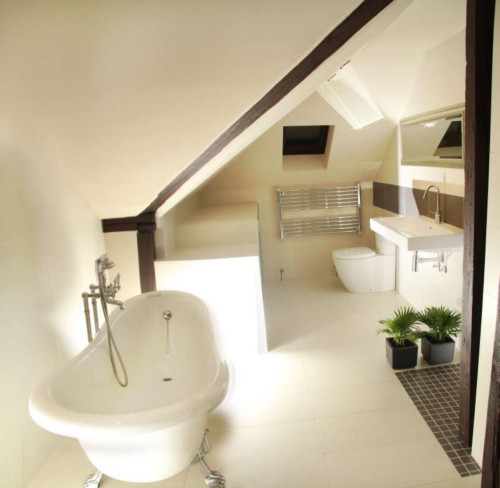
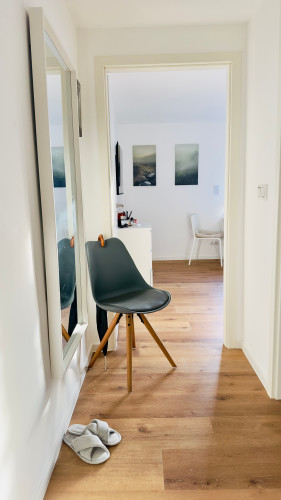
Zimmer in der Hufnagelstraße
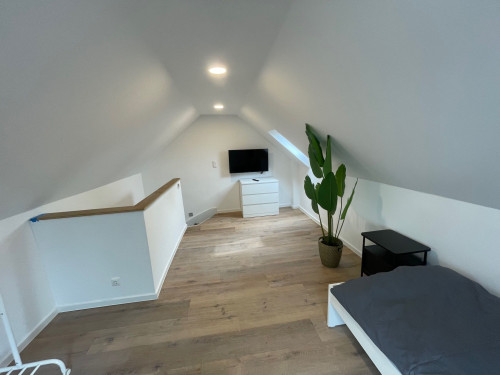
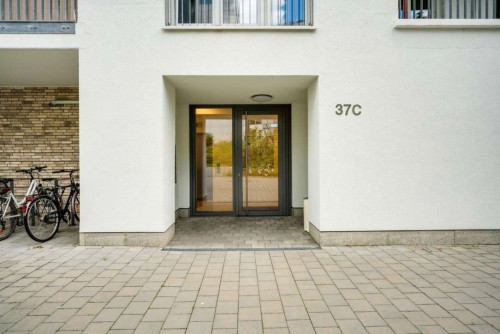
Zimmer in der Münchener Straße
Frankfurt is a lively city with neighbourhoods that offer many activities on an affordable budget. Whether you're interested in exploring culture or experiencing the arts, you will find a neighbourhood that matches your interests.
This safe and popular neighbourhood offers easy access to the city centre in 3 to 8 minutes via public transportation and 15 to 20 minutes on foot. Notable attractions in the area include the Museum Embankment and the Sachsenhausen Memorial and Museum.
The area is known for its mix of Wilhelminian-style villas, modern skyscrapers, and leafy streets. It takes 25 to 30 minutes to get to the city centre on foot, or you can reach it in 5 to 10 minutes by tram. It is divided into Westend-Süd and Westend-Nord. The top attractions in this area are the Botanical Garden and the Senckenberg Nature Museum.
It is in the northwest of Frankfurt and a part of the borough Kalbach-Riedberg. It is about eight kilometres from the city centre, 20 to 32 minutes by bus. Riedberg is connected to Frankfurt city centre by metro lines U8 and U9. It is also easily accessible by car via Rosa-Luxemburg-Straße.
Frankfurt is one of the most expensive cities in Germany, with a cost of living that is generally higher than in other cities such as Berlin. According to Numbeo, for a single person, the average monthly cost of living in Frankfurt, excluding rent, is approximately 1,106.80€.
Item | Monthly Cost (€) |
1 Bedroom Apartment in City Centre | 1,153.00€ |
1 Bedroom Apartment Outside of City Centre | 952.45€ |
Item | Monthly Cost (€) |
Fresh White 500 g Loaf of Bread | 1.94€ |
1 kg Tomatoes | 3.37€ |
1 kg Onions | 1.63€ |
1 L Milk | 1.17€ |
1 kg White Rice | 3.10€ |
12 Eggs | 3.32€ |
1 kg Local Cheese | 13.67€ |
1 kg Chicken Fillets | 10.72€ |
1 kg Oranges | 1.88€ |
1 kg Apple | 2.87€ |
Item | Monthly Cost (€) |
Basic Utilities for 85 m² Apartment | 359.49€ |
Mobile Phone Plan | 20.07€ |
Item | Cost (€) |
One-Way Ticket | 3.80€ |
Monthly Public Transport Pass | 63.00€ |
The public transportation system in Frankfurt consists of the U-Bahn (subways), S-Bahn (trains), trams, and buses. The public transportation system allows people to move easily through the city. It is cheaper, greener and faster than cars.
The system is run by the Rhine-Main Transport Association (RMV) and Verkehrsgesellschaft Frankfurt (VGF). The difference between them is that RMV is a regional transport authority that plans and sets fares.
The transportation system serves numerous cities, including Frankfurt. The VGF is responsible for public transport in Frankfurt city only, specifically the U-Bahn (subway), trams, and buses. While RMV offers regional tickets, such as semester tickets, VGF accepts RMV tickets for travel within Frankfurt.
The U-Bahn is the main metro system. It consists of 84 stations across nine lines, numbered U1 to U9. Approximately 59% of the track is underground, while the rest runs above ground in the suburbs. Eight of the lines travel through the city centre.
The Metro bus routes M32, M34, M36, M43, M46, M55, M60 and M72/M73 run around the clock every day of the week, and they run quite frequently: minimum every ten minutes during the day, every quarter-hour on Sundays and public holidays, and every half hour at night.
The Rhine-Main S-Bahn includes nine lines, S1–S9, serving Frankfurt and nearby cities like Wiesbaden, Mainz, and Offenbach. The frequency is two to three minutes in peak hours.
Walking is very common in Frankfurt, where people often walk along the Main River. Walking tours are available that share stories about the landmarks and historical sites.
Tickets for the Frankfurt city zone, excluding the airport, cost €3.80 for adults and €1.55 for children.
Short trips of less than 2 km cost €2.35 for adults.
If you will travel more than once in a day, the ticket costs €13 for one person or €26 for a group of up to 5 people, and it includes travel to the airport.
Students can benefit from discounts: the RMV Schülerticket Hessen costs €33.80 per month or €398 per year and allows unlimited travel across Hesse.
International students are eligible for these offers with proof of enrolment. It’s best to check the RMV or VGF apps for the latest details and eligibility.
Städel Museum: Founded in 1815 by Johann Friedrich Städel. It has over 3,100 paintings, 660 sculptures, and 4,600+ photographs. Regular tickets cost 19 euros, but students receive a reduced admission fee.
Senckenberg Nature Museum: Opened in 1907, it features Germany's largest dinosaur collection, including 18 reconstructed skeletons such as Brachiosaurus and T. rex, the world's largest bird display, and mammal galleries.
Historical Museum Frankfurt: Founded in 1878, it houses around 600,000 objects that document the city's key cultural holdings, including paintings, graphic prints, sculptures, ceramics, and coins.