




The Ultimate Guide to Studying in the UK
Tips and Advice
Exploring
5 mins read


Share

Updated at: 20 September, 2026

By Casita Team
Tips and Advice
Exploring
5 mins read
Updated at: 20 September, 2026
By Casita Team
Share
Over 680,000 international students currently call the UK home. From the energetic streets of London and Manchester to historic campuses in Edinburgh and Oxford, British universities offer world-class education alongside rich cultural experiences.
Whether you want to dive into cutting-edge research or boost your career prospects through practical industry placements, getting your degree in the UK is a major catalyst for your future. This guide cuts through the noise and walks you step-by-step through degrees, applications, visas, costs, and student life.
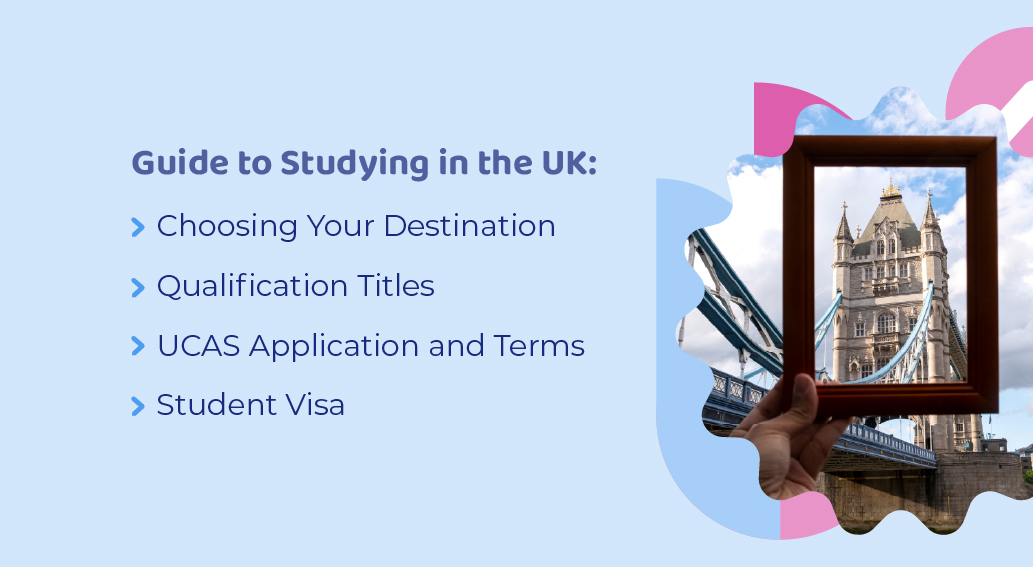
Choosing Your Student Destination in the UK
Picking the right location shapes your daily life, social scene, and student budget. The cost of living varies significantly depending on where your university is located.
- London: A massive global hub for culture, finance, and networking. While it houses world-leading institutions, it commands higher living and housing expenses.
- Manchester and Birmingham: Bustling metropolitan cities with huge student communities, excellent public transport, and lower day-to-day costs than London.
- Edinburgh and Glasgow: Popular Scottish hubs known for historical campus settings, active arts scenes, and strong student communities.
- Cardiff and Belfast: Affordable capital cities offering lower rent rates while providing top-tier academic facilities.
Understanding the UK Higher Education System
British higher education includes over 160 degree-awarding institutions. Academic calendars typically break down into two key entry points: autumn (September or October start) and spring (January or February start).
- Undergraduate Degrees: Standard bachelor's degrees (BSc, BA, BEng) last three years in England, Wales, and Northern Ireland. In Scotland, standard honours degrees take four years.
- Sandwich Courses: Typically add a placement year to an undergraduate degree, commonly resulting in a four-year course for a standard three-year degree. The placement may be industrial or professional, and the structure and timing vary by course. This practical experience gives you a substantial hiring advantage after graduation.
- Postgraduate Degrees: Many full-time UK master's degrees can be completed in one year, although postgraduate master's programmes vary in length and some take two years or longer. This structure makes them faster and more cost-effective than two-year programs in many other countries. PhD programs typically take three to four years of full-time research.
Qualification Titles and Degree Acronyms
Navigating British degree abbreviations can feel confusing when searching university portals. Here is a handy guide to common qualification titles across undergraduate and postgraduate levels.
| Abbreviation | Full Qualification Title | Study Level | Standard Duration |
| CertHE | Certificate of Higher Education | Undergraduate | 1 Year |
| DipHE | Diploma of Higher Education | Undergraduate | 2 Years |
| BA / BSc / BEng | Bachelor of Arts / Science / Engineering | Undergraduate | 3-4 Years |
| BM BCh | Bachelor of Medicine, Bachelor of Surgery | Undergraduate | 5-6 Years |
| MA / MSc / MBA | Master of Arts / Science / Business Administration | Postgraduate Taught | 1 Year |
| MEng / MChem | Integrated Master of Engineering / Chemistry | Undergraduate/Master | 4 Years |
| MPhil / MRes | Master of Philosophy / Master of Research | Postgraduate Research | 1-2 Years |
| PhD / DPhil | Doctor of Philosophy | Doctorate | 3-4 Years |
Step-by-Step UCAS Application Guide
Undergraduate admissions for UK universities run through a centralised platform called UCAS (Universities and Colleges Admissions Service). Instead of filling out individual forms for every university, you submit a single application to up to five choices.
- Select Your Courses: Choose up to five courses that match your academic interests and career goals using the UCAS Hub.
- Set Up Your Account: Create a profile and link your account to your school or college if you have an institutional buzzword.
- Fill Out Academic and Employment Details: Input all completed qualifications, current subjects, and any paid work experience.
- Draft a Strong Personal Statement: Complete the UCAS personal statement, which is now divided into three questions. The three answers have a combined maximum of 4,000 characters, including spaces, with a minimum of 350 characters for each question.
- Attach Your Reference Letter: Provide one reference from an appropriate referee. If you are currently in education, this will normally be someone who knows you academically and can provide predicted grades where applicable.
- Pay the Application Fee: Submit your completed application with the £34.50 UCAS application fee for up to five choices.
- Track Your Application Status: Monitor admissions decisions, respond to offers, or apply through Clearing if needed.
Essential UCAS and Admissions Terms
- Buzzword: A unique code provided by your school or agency that links your individual UCAS application directly to their hub.
- Centre: A registered school, college, or authority approved to manage UCAS applications.
- Choice: An individual course selection on your application (you can pick up to five).
- Changed Course Offer: An alternative offer made by a university if they feel a different course suits your entry qualifications better.
- Conditional Offer: An offer of admission that depends on you meeting specific requirements, such as final exam grades or English test scores.
- Unconditional Offer: A firm acceptance offer with no remaining academic or entry requirements.
- Firm Choice: Your primary, preferred university choice that you formally accept on the portal.
- Insurance Choice: Your secondary backup choice, typically set with lower entry grade requirements than your firm choice.
- Clearing: A service operating from July to October that matches unplaced students with universities that still have available course spots.
- Point of Entry: The specific year of study you enter when starting a degree (Year 1 for freshers, or Year 2/3 for credit transfer students).
- UCAS Tariff: A scoring system that converts secondary school qualifications into numerical points used by universities to set flexible admission criteria.
Navigating the UK Student Visa Process
International students coming to study a degree programme in the UK must obtain a UK Student Visa. Applications can be submitted up to six months prior to your official course start date.
Visa Requirements and Updated Financial Figures
- Confirmation of Acceptance for Studies (CAS): A CAS is a virtual record assigned by your licensed student sponsor once you have an unconditional offer and the sponsor is ready to sponsor you. Whether you must pay a tuition deposit before the university assigns your CAS depends on the institution's own requirements.
- Visa Application Fee: £558 for applications submitted from either outside or inside the UK.
- Immigration Health Surcharge (IHS): £776 for each year of study, granting access to the UK National Health Service (NHS).
- Maintenance Funds Proof: You must prove you hold enough money to cover basic living expenses for up to nine months. Current rules require £1,529 per month for study in London for up to nine months (£13,761 maximum), or £1,171 per month for study outside London for up to nine months (£10,539 maximum). Where financial evidence is required, you must normally have held the required funds for at least 28 consecutive days. The end date of that 28-day period must be within 31 days of the visa application.
- English Proficiency Proof: You must demonstrate the required level of English, normally at CEFR B2 for degree-level study. Depending on your circumstances, this can be demonstrated through an approved English-language test, a qualifying previous qualification, or assessment by your higher education provider.
- Work Rights: Degree-level international students can work up to 20 hours per week during academic term times and full-time during official university holidays.
Key Considerations When Booking Housing
- Location and Travel Time: Check walking distance to lectures or evaluate daily commute costs on local buses or local train routes.
- Inclusive Utility Bills: Confirm whether monthly rent covers water, gas, electricity, heating, and Wi-Fi to avoid unexpected bills.
- Building Amenities: Look out for extra perks such as dedicated study rooms, laundry facilities, gym access, contents insurance, and 24/7 security.
On-Campus Essentials: What Happens After Arrival
- Student Services Department: The primary campus office for student welfare, advice on visas, financial guidance, and disability services.
- Admissions Office: The team managing official identity checks, document verification, and full university enrolment.
- Bank Letter: Some banks may request a letter or other documentation from your university confirming your student status and/or UK address when opening an account. Requirements vary between banks.
- Date of Conferral: The date on which the university formally awards the qualification. The terminology and formal awarding process vary between institutions.
Securing Your New Home
Sorting out housing is the final big step before heading to campus. Finding the right studio, en-suite room, or shared apartment comes down to a straightforward three-step process:
- Explore: Enter your university name or target city into the search bar. Use the filters to narrow down properties by room style, building amenities, and contract lengths.
- Discover: Compare options by checking exact distances to your campus alongside weekly rental rates to stay within your budget.
- Secure: Submit an inquiry on your preferred room. An accommodation expert will follow up directly to guide you through the booking details and lock in your place.
Once you’ve decided on your new home and all the details surrounding your move, you’re finally ready to begin your student journey.
Tips and Advice
Exploring
By Casita Team
Share
Tips and Advice
Exploring
Updated at:
By Casita Team
Share
